
About ILA
A Part of the International Law Association
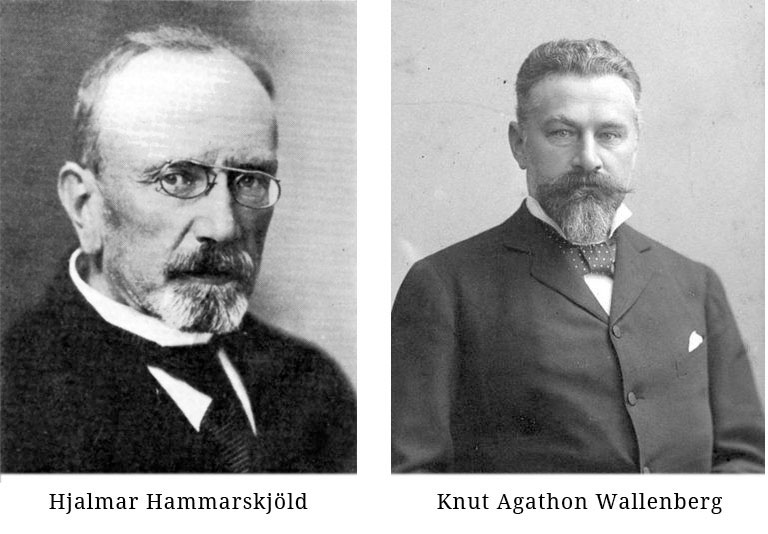
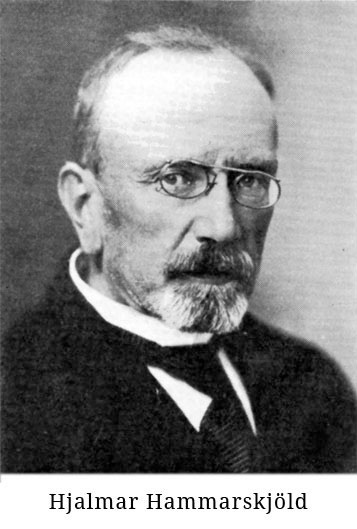
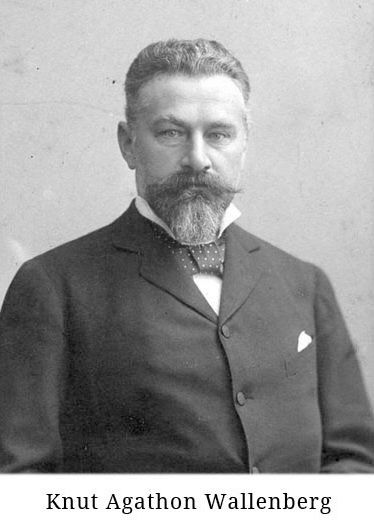
The Swedish Branch of the International Law Association (ILA Sweden) was founded in 1922 by Hjalmar Hammarskjöld and Knut Agathon Wallenberg with the aim of promoting the development of international law. Today, the ILA Sweden is one of around sixty national branches of the worldwide organization International Law Association (ILA). ILA has a venerable heritage – the organization was founded in Brussels in 1873 and has since then brought together lawyers from all over the world to jointly promote the development of international law. The ILA is currently headquartered in London and consists of more than 5,000 members.
The ILA is led by an Executive Council, where the national sections are represented. The ILA’s purpose is to study, clarify and develop international law, which is fulfilled primarily through work in international committees and working groups that study specific international law issues, ranging from international arbitration and dispute resolution to space law and artificial intelligence. Through this work, the ILA has played a crucial role in the development of international law for more than a century and a half. In addition, an ILA conference is organized every two years for the organization’s members. The national branches also organize activities, such as the International Law Weekend, which is organized in New York every year by the American Branch.
ILA Sweden’s members participate in the ILA’s international activities and contribute to the important work of the association.
+5000
Members
+60
National departments
+20
Committees
1873
ILA founded
"The objectives of the Association are the study, clarification and development of international law, both public and private, and the furtherance of international understanding and respect for international law."
Article 3.1 of the Constitution of the International Law Association
History
ILA Sweden was founded on 3 June 1922 by, among others, Hjalmar Hammarskjöld and Knut Agathon Wallenberg. § 2 of ILA Sweden’s statutes stated that “The purpose of the association is, as a Swedish Branch of the International Law Association, to work for the development of international law”. Hammarskjöld, who had previously been Prime Minister, was elected Chairman and Wallenberg, who had previously been Minister of Foreign Affairs, was elected Vice Chairman. In 1924, the Swedish ILA hosted the 33rd ILA Conference.
Over the years, prominent Swedish lawyers who have been active in international law have served on the board of the ILA Sweden, including Prime Ministers and Ministers of Justice and Foreign Affairs, Presidents of the Svea Court of Appeal, Marshals of the Realm, business directors and company leaders, professors, ambassadors, law firm partners, Secretary Generals of the Stockholm Chamber of Commerce’s Arbitration Institute, judges of the International Court of Justice in the Hague and members of the Permanent Court of Arbitration in The Hague and the United Nations International Law Commission. Examples include Algot Bagge, Annette Magnusson, Axel Ax:son Johnson, Birger Ekeberg, Emil Sandström, Gunnar Lagergren, Hans Blix, Hans Corell, Inger Österdahl, Kaj Hobér, Marie Jacobsson, Ove Bring, Pehr Gyllenhammar, Sten Rudholm, Sture Petrén, Ulf Franke and Östen Undén.
Since its founding in Brussels in 1873, the ILA has played a crucial role in the development of international law and continues to do so today. Reports and resolutions from the ILA’s international committees have been adopted and used by international organizations and legislative bodies such as the United Nations in the development of many of the texts that today constitute the body of international law. The ILA committees have developed common principles and standards in subjects such as bills of exchange (1876, 1908, 1910), peacetime aviation (1920), international arbitration law (1895, 1922, 1938, 1948, 1959), international insolvency law (1938, 1946, 1954), jurisdiction over legal persons (2002), a permanent international criminal court (1922, 1923), the effect of war on contractual obligations (1930), rights to the seabed, rights relating to territorial waters, and international waterways and rivers (1948, 1954, 1960, 1962), peaceful uses of nuclear energy (1960, 1962), monetary law (1954, 1960), foreign investment arbitration (1962), and the responsibility of international organizations (2004). The work of the ILA has had an impact on the development of international law, for example through conventions on state immunity and jurisdiction and the recognition and enforcement of judgments.
With a history spanning more than 150 years, the ILA’s important work has continued in peacetime and periods of deepened international cooperation as well as in wartime and periods of international division. In the Swedish Law Journal in 1946, the Chairman of ILA Sweden, Algot Bagge, commented on the ILA Conference that had taken place that year in Cambridge:
"One would think that the war that has brought about so much international division would have put an end to the cooperation of international lawyers, at least for the time being. However, the experience from the last world war already went in the opposite direction and it seems as if even now the international lawlessness during and after the war has made the work on an international legal system appear more necessary than ever. People's need for order and justice is no less now than before and even if the efforts to put law in the highest place among nations at times seem to bear the mark of Sisyphus, this work continues, not least after every major war, with surprising perseverance."
Translated by David Silverlid.